It started with a family, an idea carried from Africa, and a piece of land in Costa Rica that felt too special to treat like a property. A river. Forest that was still forest. A small community nearby. And enough distance from the usual route to feel completely different.
Rafiki grew from there — not into a resort, but into a place where people stay close to nature, do things together, and leave knowing the valley better than when they arrived.
Constant Boshoff grew up close to wilderness in Africa and built a family retreat around simple things — canvas tents, a fire, time outside, people together. Not luxury for its own sake: just comfortable enough to stay close to nature instead of walling yourself off from it.
In 1999 he found a farm in Costa Rica's lower Savegre Valley — tropical forest, a warm river, birdlife, small communities, waterfalls. Rafiki opened in 2002. The safari tents came from Africa. Everything after that became Costa Rican.
You're not coming here for an African animal safari. Here, safari is the journey — the days, the people you travel with, and the places the river takes you.

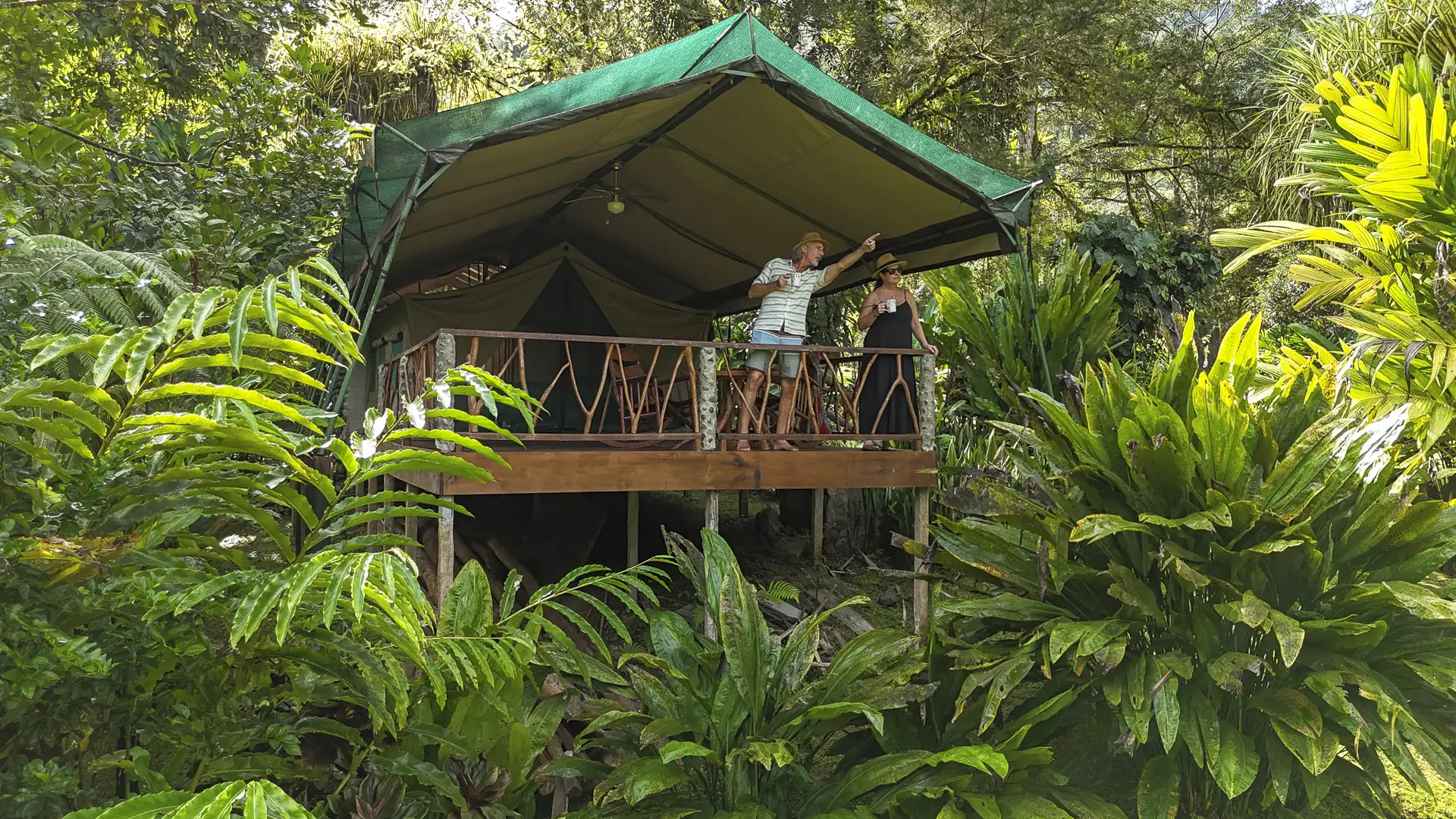
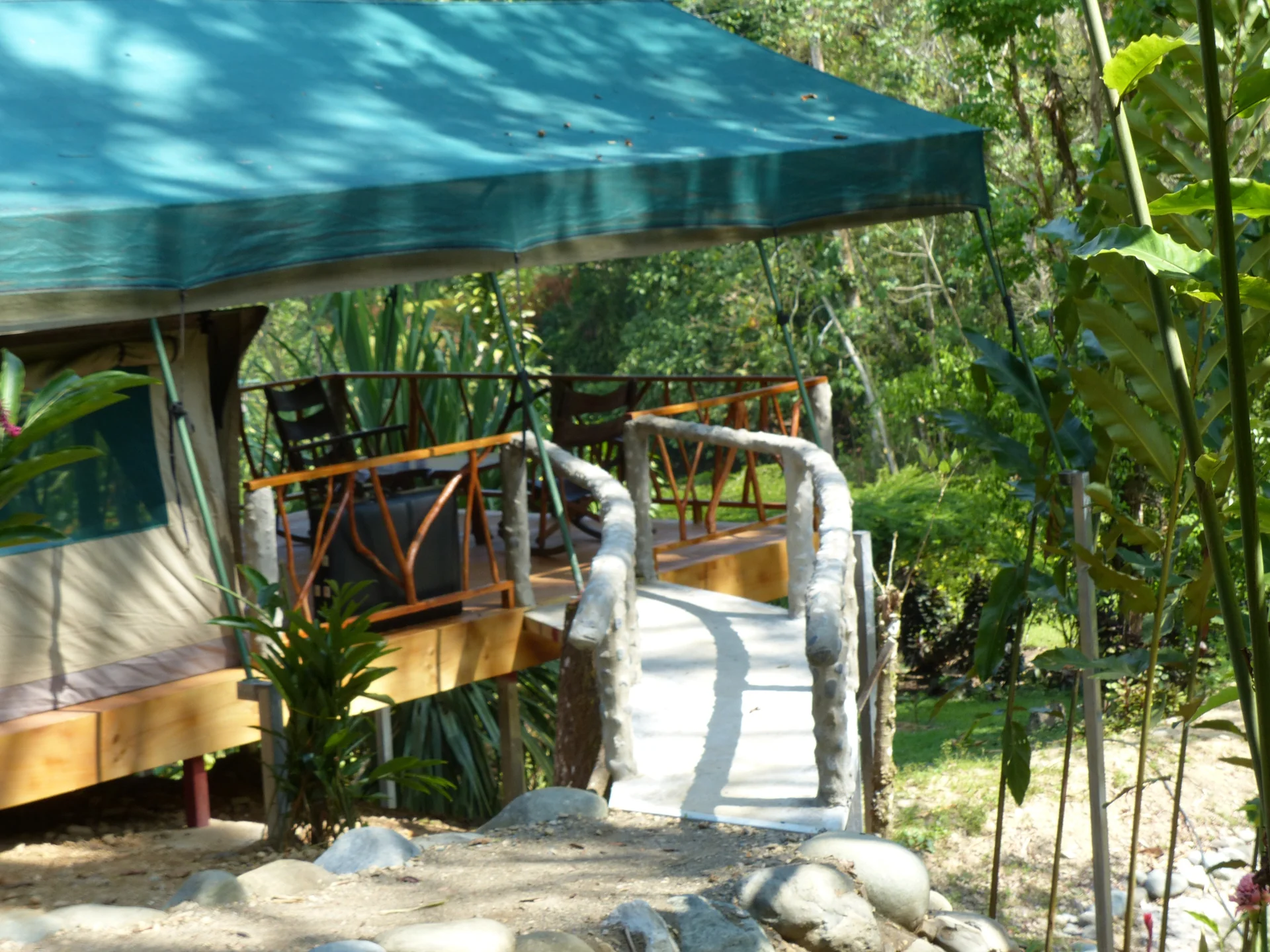

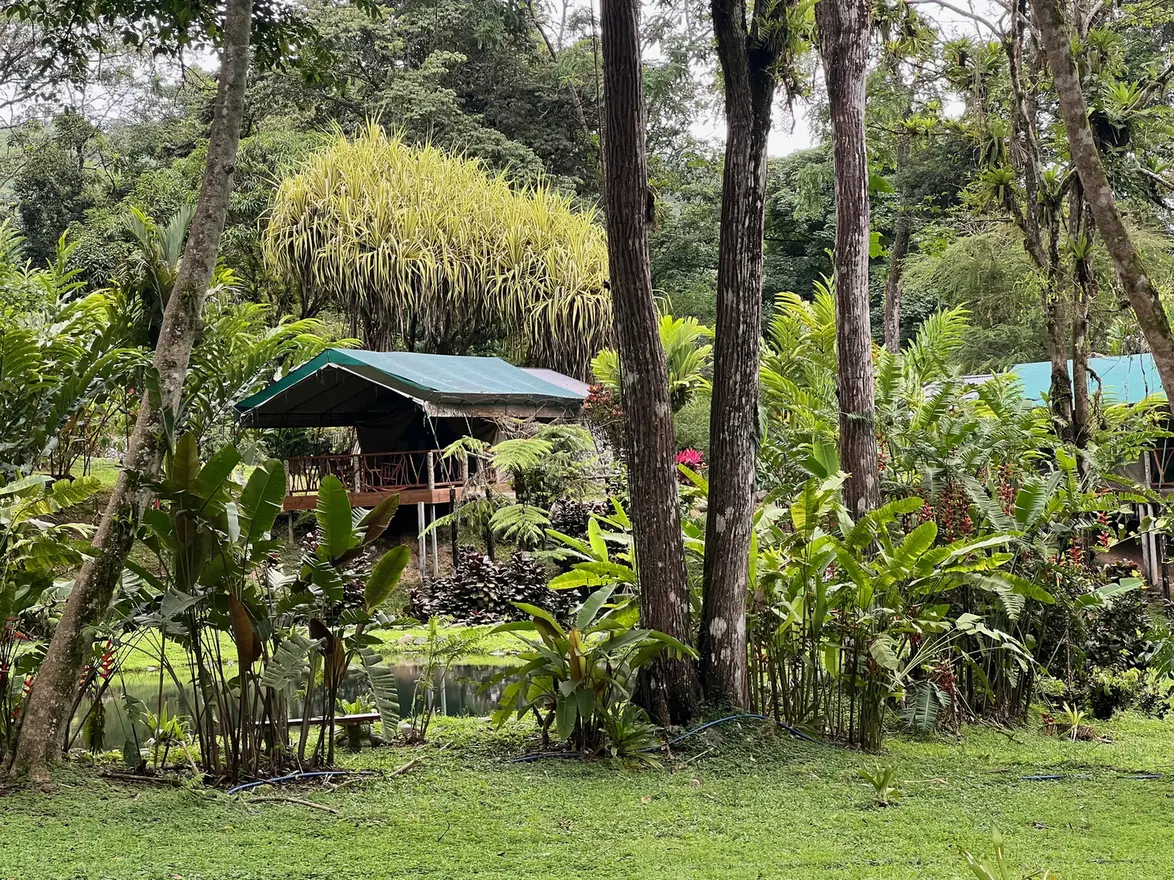
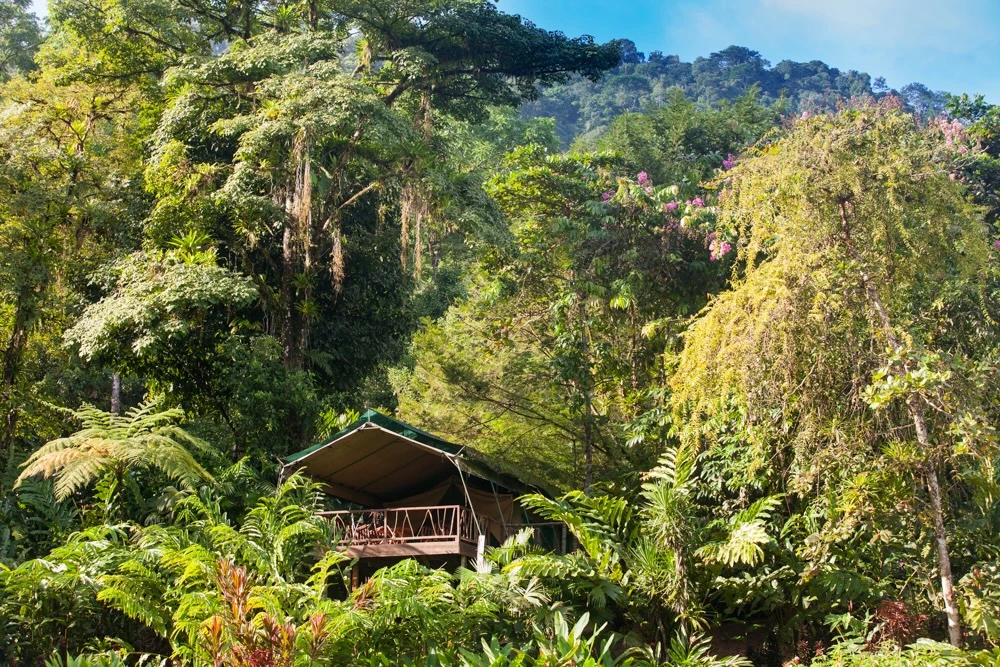
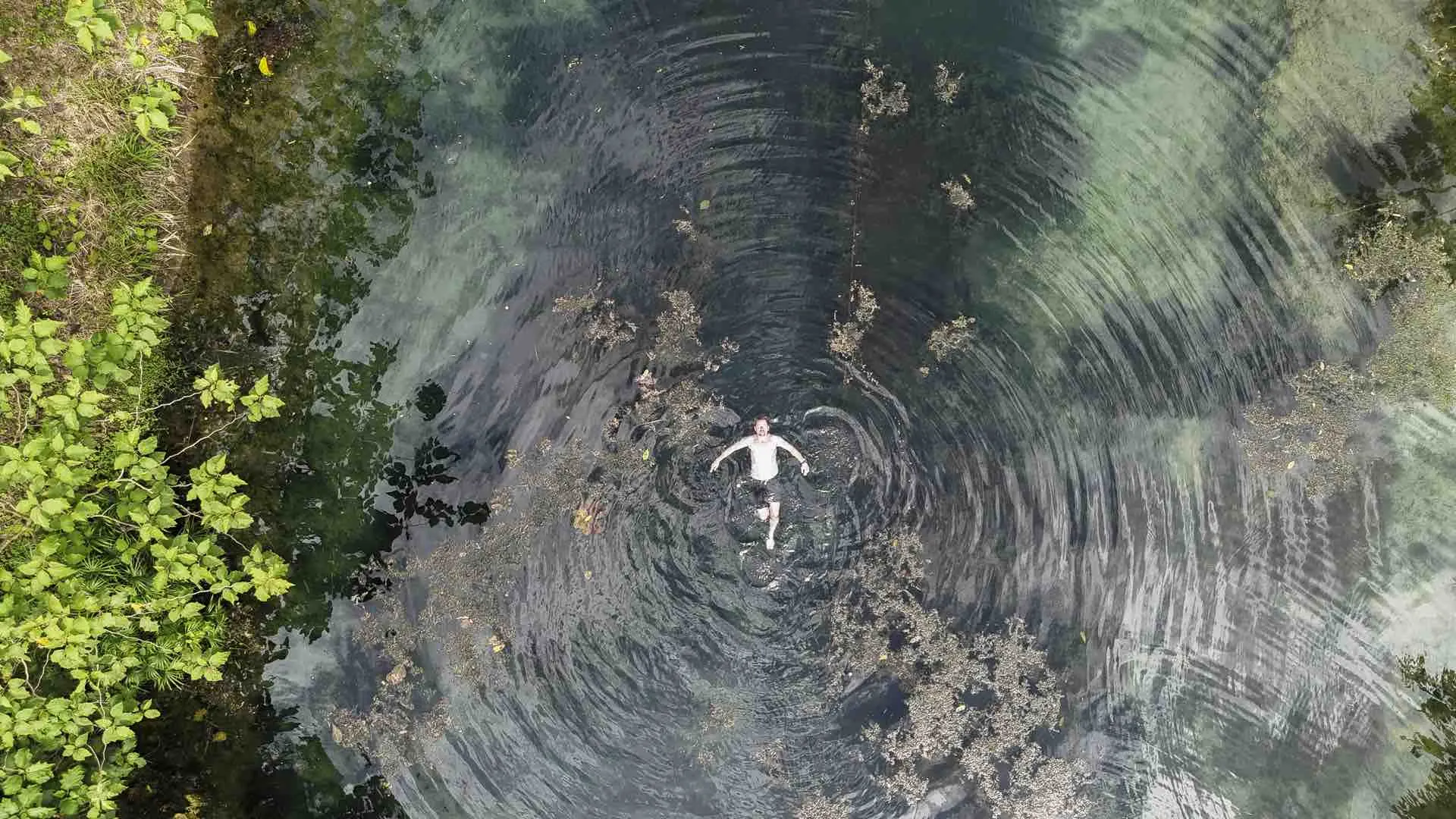
This part of the Savegre is lower, warmer, tropical — the river moving through dense forest and communities that sit well away from Costa Rica's main tourism corridor.
The point was never to build somewhere convenient and manufacture a nature experience around it. The river was already here. The forest was already here. The people were already here. Rafiki had to learn how to belong to that.

Most of the team comes from Santo Domingo and the surrounding valley. The knowledge guests come here for can't be imported — the guides know the river because they've spent years around it: how it changes with rain, the trails, the horses, the birds, the places worth stopping.
Over the years Rafiki became a way to build work around a landscape people already knew. The Duarte family's horses were part of the valley before any tourist arrived. Neighboring families in Quebrada Arroyo run Los Campesinos — their own forest-and-waterfall project, on their own terms. Rafiki embraces the local culture and allows our guests to respectfully interact with the community.
A forest is easier to protect when people can build a life around it. That knowledge isn't a layer on top of the experience — it is the experience.
Constant's son Loki, a biologist, and Mauren, who grew up in the valley and became its first college graduate, run Rafiki today alongside the local team. The job now isn't to make Rafiki bigger at any cost — it's to protect what makes it worth coming for while keeping an independent lodge alive in a remote valley.
That means choosing: who Rafiki is for, how many people make sense, which experiences belong here. The best version of Rafiki happens when guests stay a few nights — long enough for the guides to know who they're taking out, long enough for the place to stop feeling like an activity and start feeling like somewhere you've actually been.
Rafiki doesn't need everyone.
It's trying to give the right people a better experience once they're here.
And that's okay. We'd rather you know that before you book than after.

Your tent, the river, the forest, the guides, the meals and the experiences belong to the same place. You don't wake up searching for another company every morning — you wake up at Rafiki and decide what kind of nature day you want.
Come to raft, come for the birds, come because your family needs a few days off the usual route. The reason you book doesn't have to be what you remember most — that's happened here plenty of times.