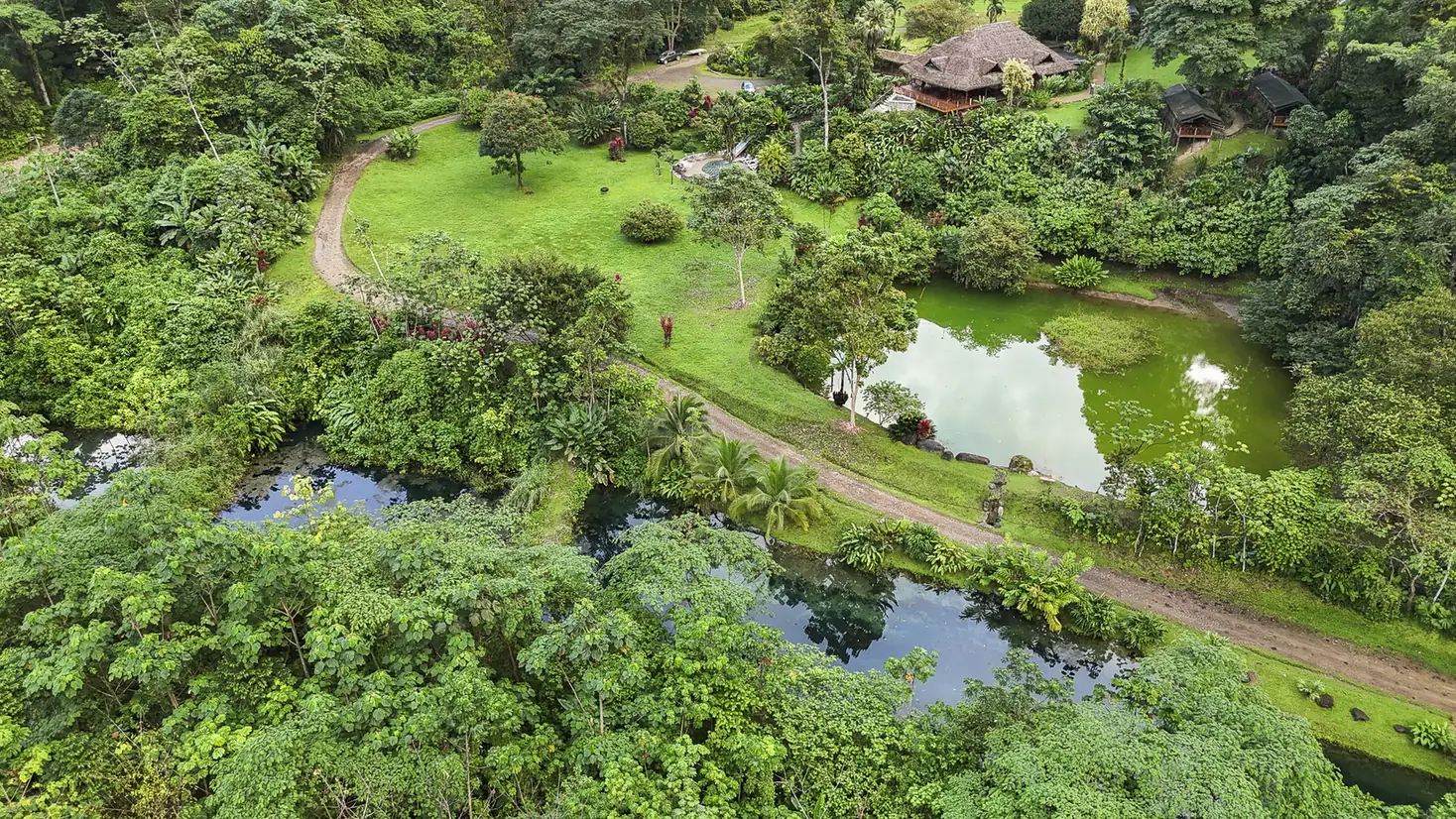
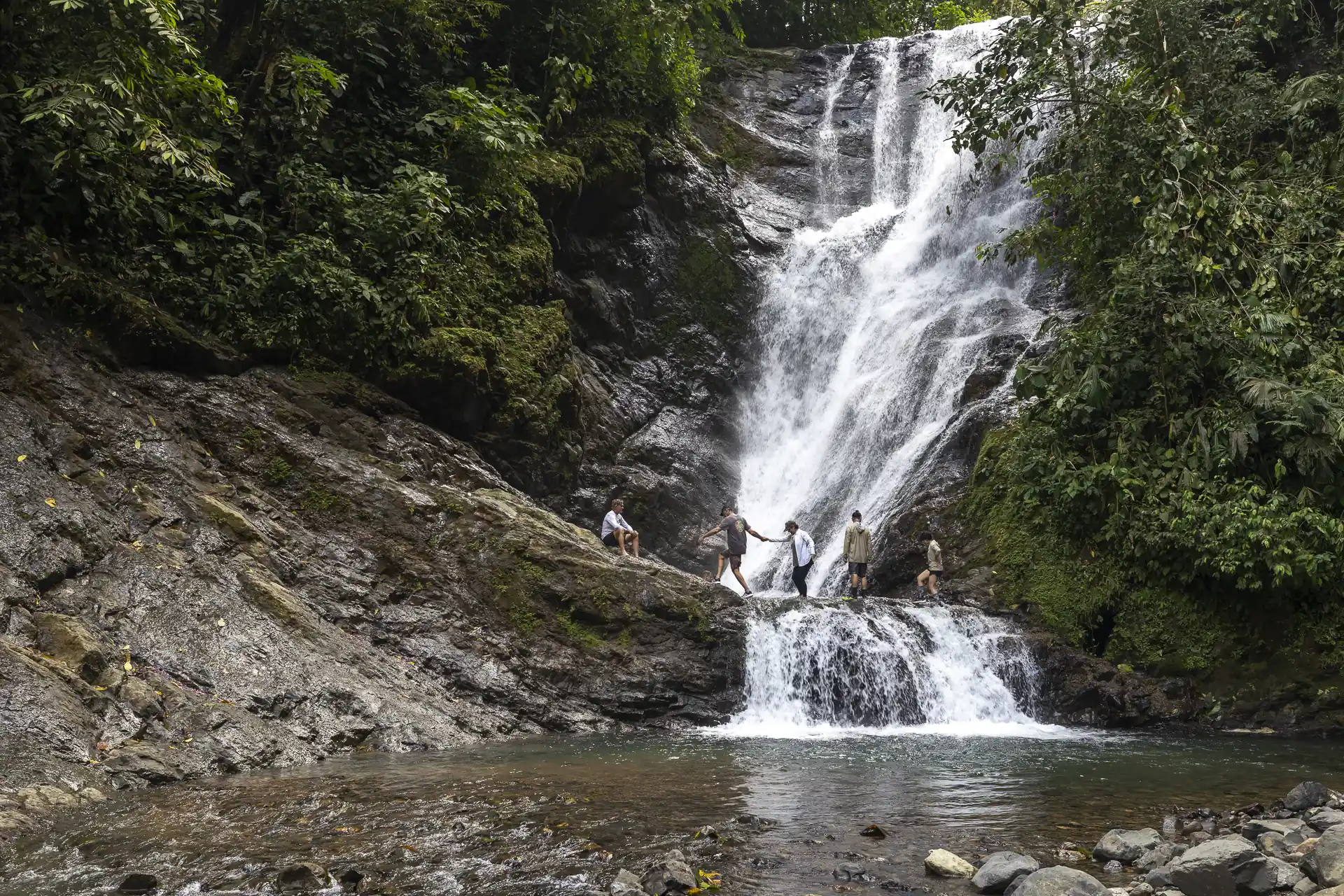
The river, wildlife and tropical forest around Rafiki aren't scenery — they're the reason the lodge exists. The idea has been simple since the beginning: if people can build a livelihood around protecting this landscape, the forest becomes worth more standing than cleared.
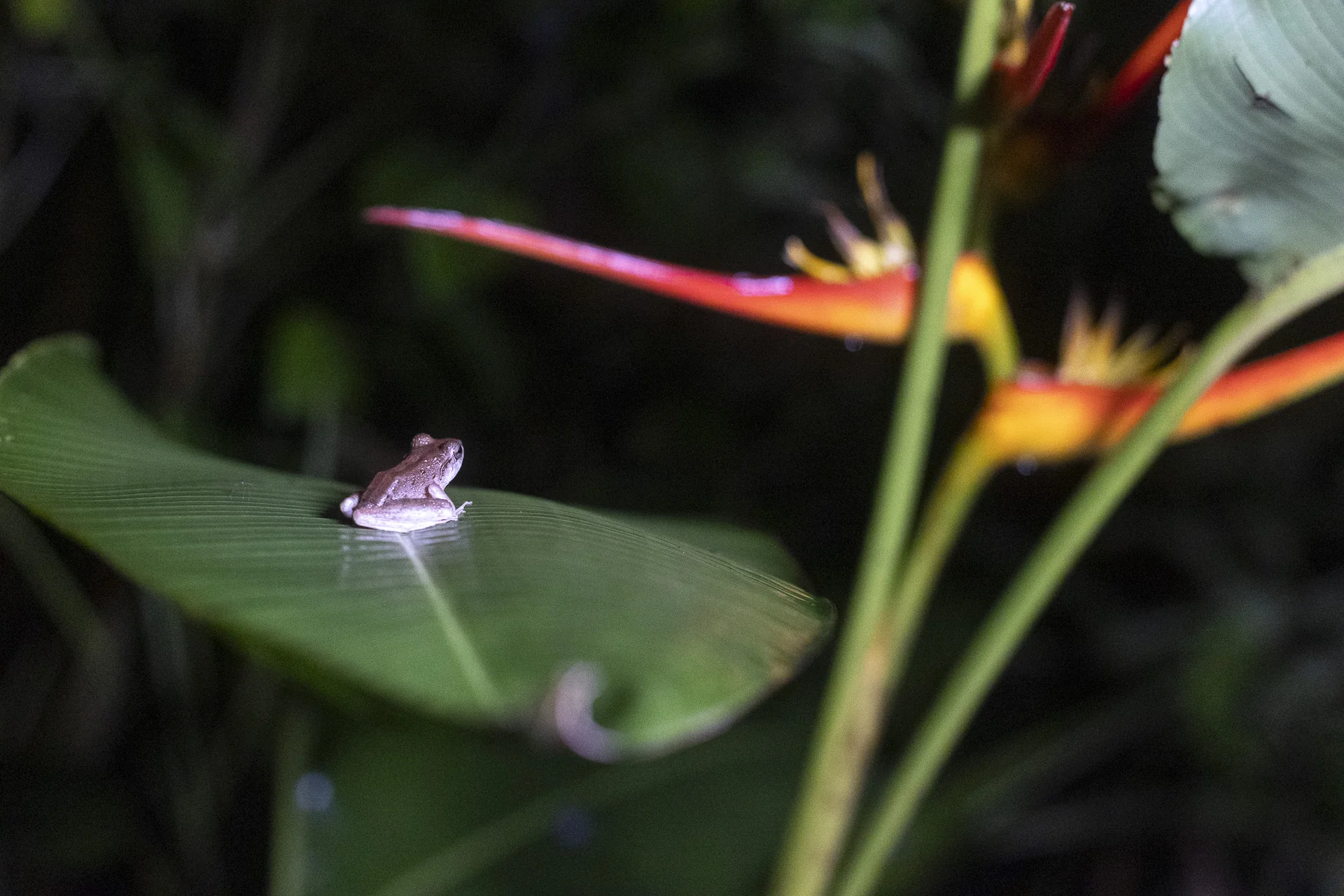
Rafiki sits at the northern edge of the Paso de la Danta Biological Corridor — a stretch of privately owned land connecting the Savegre Valley to the Osa Peninsula and Corcovado National Park. "Paso de la Danta" translates to "tapir crossing," named for the Baird's tapir, Central America's largest land mammal and one that needs large, connected forest to survive. Protect enough habitat for a tapir to move through, and you protect the route for pumas, jaguars, birds and everything else that depends on the same connected forest.
Rafiki works with ASANA, the local organization behind the corridor, because a patchwork of private properties only stays connected if enough of the landowners in it choose to keep it that way.

The lower Savegre was logged for hardwood, then cleared for cattle, long before it was protected. When Costa Rica tightened its forestry laws, the people who had depended on logging were left with no income and no forest left to log. When the Boshoff family arrived in the valley in 1999, the lesson was already clear: conservation only works here if it works for the people living beside the forest too.
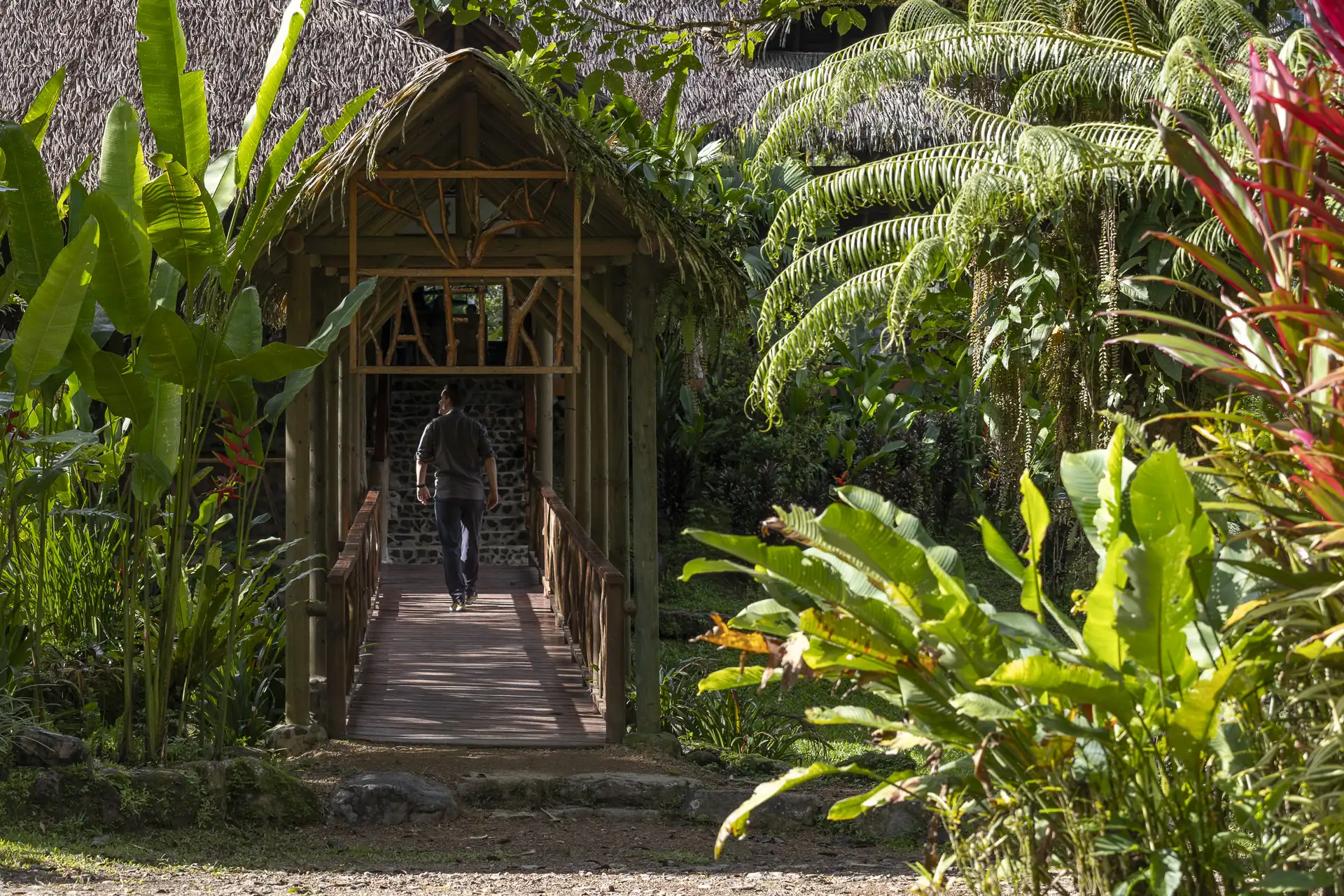
So Rafiki built the lodge with the community from the start — what began as clearing pasture and carrying construction materials grew into hotel staff, naturalist guides, mechanics and management. And when Rafiki opened in 2002, Santo Domingo had one schoolhouse teaching first through sixth grade. Today it has a pre-school, grade school and high school — built on an economy that gives families a reason to stay, and their kids more to choose from.
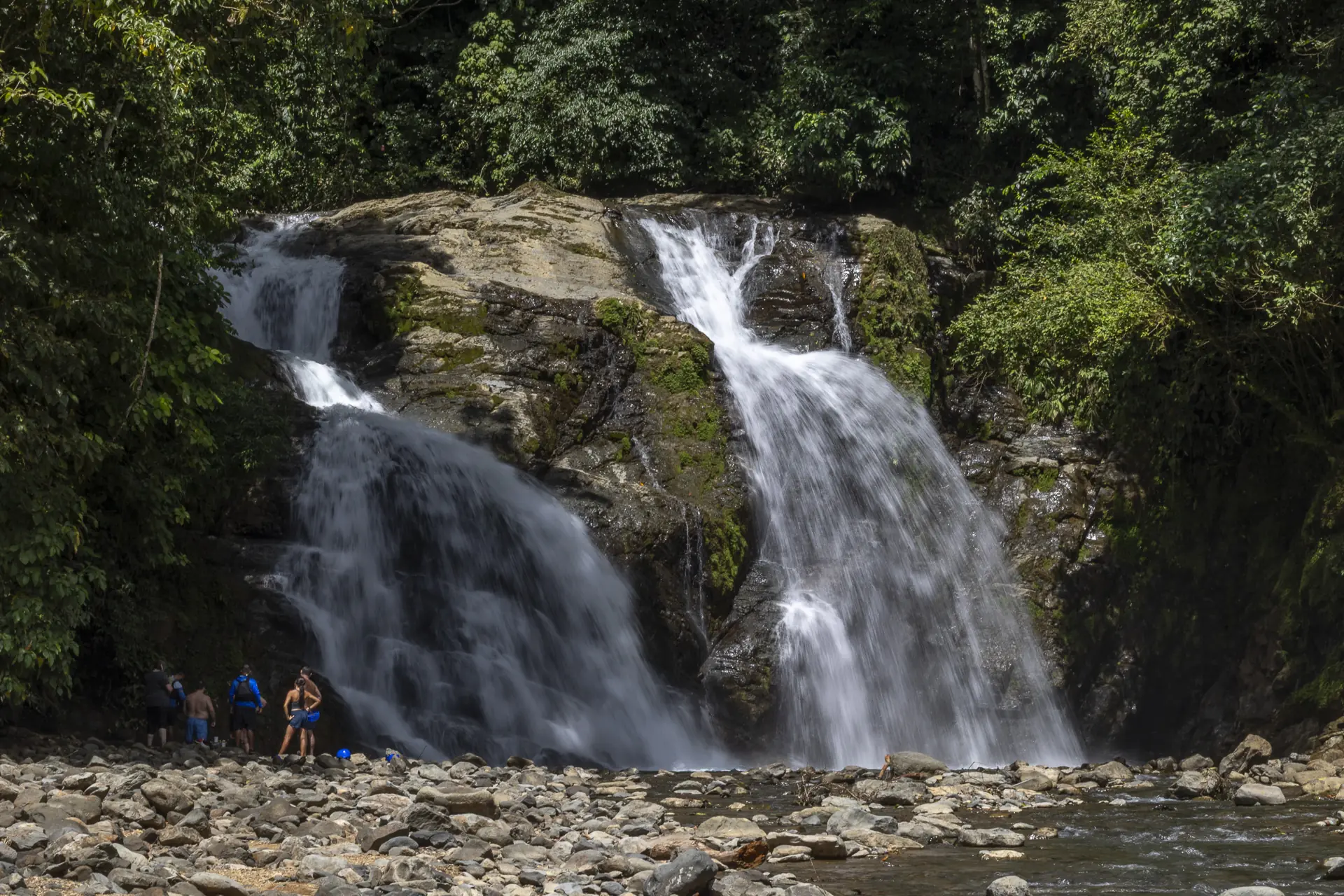
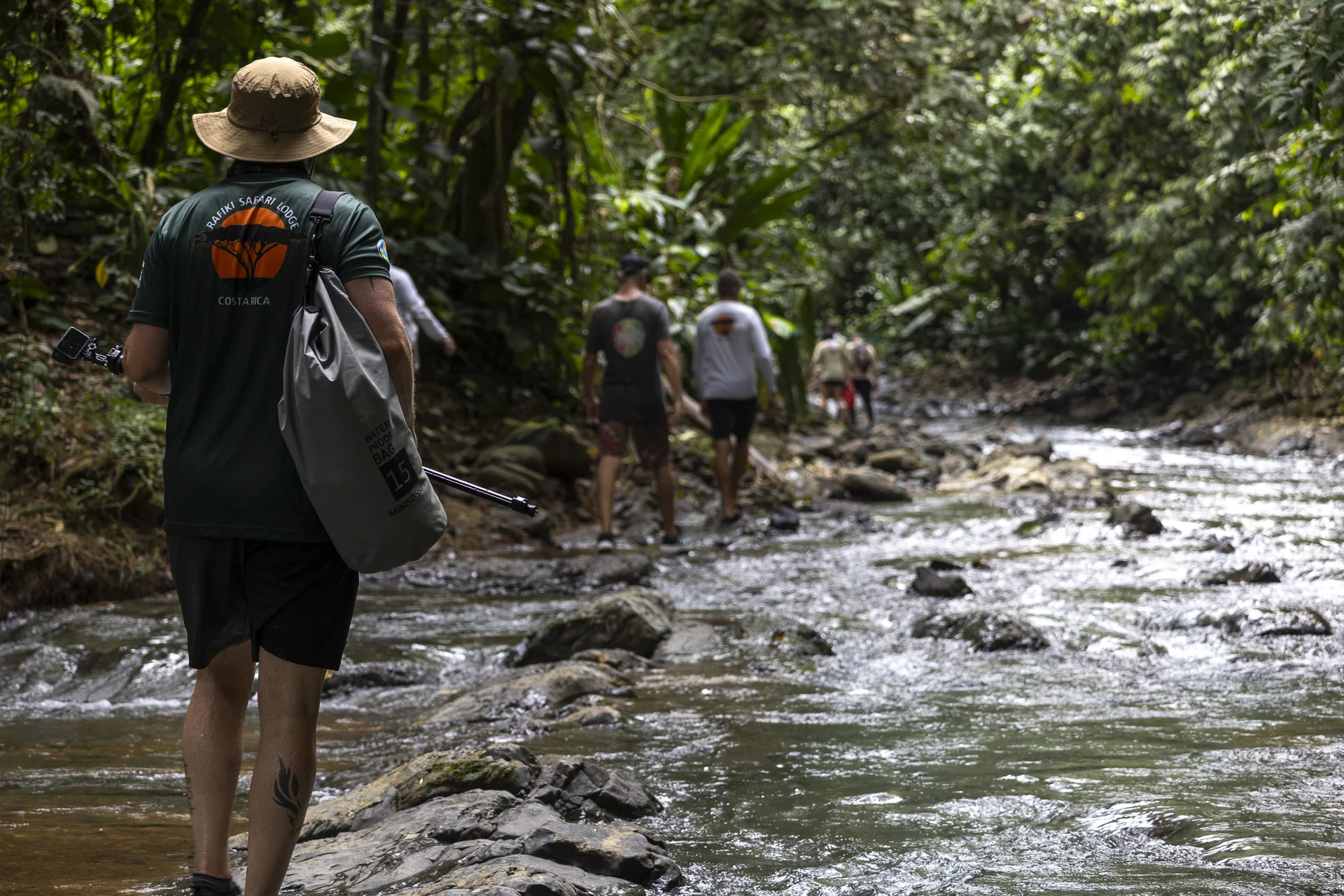
The Duarte family already knew horses before Rafiki existed — tourism just gave that knowledge another economic use, and grew it into the horseback-riding trips guests take today. In Quebrada Arroyo, families built Los Campesinos around their own forest, waterfalls and trails; Rafiki simply connects guests to it through experiences like the Los Campesinos hike. In both cases, the value stays with the people already living on that land.
Every traveler uses resources, and every lodge does too — so this isn't about pretending to leave nothing behind. It's staying local, using local guides, choosing community-owned experiences, respecting river conditions and wildlife, and remembering that the people showing you Costa Rica live here after your vacation ends. It's also why Rafiki doesn't chase day-tour volume: too many visitors changes the river, the trails and the experience itself.
That's exactly why we need specifics. Rafiki's conservation story includes participation in the Paso de la Danta biological corridor with ASANA, alongside local employment and community-based tourism. We'd rather show the projects and relationships than ask you to believe the word "sustainable."
Some of the strongest examples: local lodge employment, local guides, the Duarte family, Los Campesinos, food and service relationships. We won't claim "100% stays local" unless that's verifiable — what we can tell you is which parts of your stay create local livelihoods.
Possibly, but we'll never promise it. The Baird's tapir matters to Rafiki's ecological story because protecting enough connected habitat for tapirs protects much more than one species.
They aren't four different Rafiki projects. They're connected.
Protect the forest and wildlife has somewhere to move.
Connected habitat is what a corridor like Paso de la Danta exists to protect.
Create work around the forest and communities have more reasons to protect it.
Bring travelers into that system responsibly and tourism becomes part of the solution instead of simply another pressure on the landscape.
That's the ecological mission behind Rafiki.
You're spending time inside a living landscape — and supporting people who are working to keep it that way.